Imagine your busy Brisbane kitchen humming away under a web of pipes – everything running smoothly on gas… until a tiny, unnoticed leak turns that quiet lunch rush into a disaster. In fact, gas is both invisible and powerful; a small leak can easily ignite, causing “fires or explosions” that endanger lives. Even without flames, inhaling leaked gas causes headaches, nausea or worse.
As a local business owner, you know that Brisbane regulations treat gas safety very seriously. Queensland law requires licensed professionals to do all gas work, and every system must meet strict standards. We at LTC Gas will break down what this means: from the key safety regulations and design steps to hiring the right experts and scheduling regular checks.
By the end, you’ll know exactly how to keep your commercial gas systems running reliably – and risk-free.
Why Safe Commercial Gas Systems Matter in Brisbane
For Brisbane businesses from cafes to warehouses, safe Commercial gas systems are non-negotiable. A stray gas leak can spark a devastating explosion or silent indoor poisoning. Regular safety checks and proper maintenance protect your staff, customers and premises from these hidden hazards.
Plus, Queensland’s safety laws see no value in “optional seatbelts” – they demand compliance. In Queensland, all commercial gas work falls under the Petroleum and Gas Act 2004 and its Safety Regulation 2018, which mandate following Australian Standards for gas installations. In short, treating your commercial gas system like a critical asset pays off in both safety and peace-of-mind.
Gas Safety Regulations and Standards For Commercial Gas Systems
Brisbane businesses must follow Australia’s gas rules to the letter. The Queensland Government’s guidelines point to the key laws: the Petroleum and Gas Act and its Safety Regulation set the framework. These regulations require that every commercial installation comply with national standards. At the core is AS/NZS 5601.1 (General Gas Installations) – the rulebook for designing and installing gas piping and appliances.
(AS/NZS 5601.2 covers LP Gas in caravans/boats.) As one industry expert put it, AS/NZS 5601 “governs gas installation standards in Australia, ensuring systems are safe, efficient and compliant”.
Queensland’s regulation even lists AS 3814 for industrial gas-fired appliances and AS/NZS 1596 for LPG storage. In practice, this means your commercial kitchen or factory piped gas must meet those specs. Always ask your fitter to show that their design and methods comply with the latest AS/NZS standards. It’s not paperwork busywork – it’s what keeps the gas from ever becoming a hazard.
Licensed Professionals for Safe Commercial Gas Systems
Gas fitting is not a casual DIY project. Only a Type A licensed gas fitter can legally install or service commercial gas systems in Queensland. These pros have proven expertise in the national standards and Queensland codes. They know how to size systems, select materials, fit regulators, test pressure and purge lines correctly. Crucially, after the work they issue the mandatory Gas Compliance Certificate.
Queensland law is crystal clear: only licensed gas fitters are authorized to issue that certificate. In other words, you want a team with credentials and reputation. Don’t gamble with your business or safety by hiring someone “cheap” who’s unlicensed. As our local Brisbane neighbors say, gas fitting isn’t something you “have a crack at” – it’s best left to the qualified experts. With a licensed professional (like LTC Gas) on the job, you get formal compliance and peace of mind.
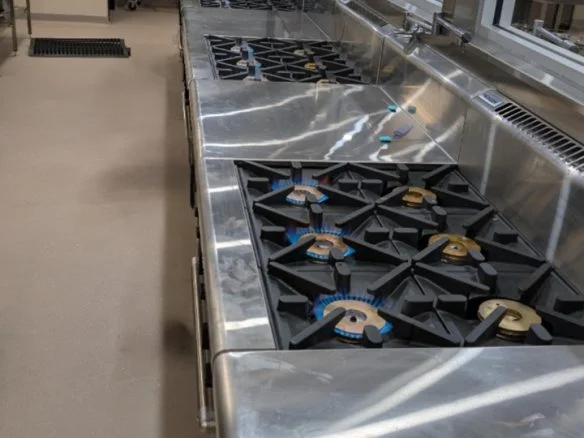
Steps for Safe Commercial Gas Systems Installation
Every safe installation starts with careful planning and ends with certification. Think of it as a multi-step checklist:
Detailed design and equipment selection:
Begin by sizing the system for your needs. Calculate peak gas demand (in MJ/h) so you choose the right meter size and pipe diameter. Select only AS/NZS 5601-approved materials and fittings. For example, the standard dictates meticulous requirements for correct pipe sizing, material choice, support and protection. Make sure regulators, valves and appliances match commercial specs. Plan ventilation and clearances for each appliance (AS/NZS 5601 gives exact clearance distances). In short, the blueprint of your system must follow the rulebook down to the last gas outlet or burner.
Permits and compliance planning:
Check all Brisbane and Queensland requirements before work begins. Major commercial installs usually need permits (plumbing/building permits can apply if you alter a kitchen or connect a new gas line). Also notify your gas retailer if you’re adding capacity to the main line. Remember, as of July 2025 QLD has moved to e-certificates, so physical compliance plates on installations are now mostly optional. You still must factor compliance into your plan: once installed, your fitter will lodge a digital Gas Compliance Certificate. Build that documentation cost into your project.
Professional installation and testing:
This is where a licensed gas fitter (Type A) takes the reins. They’ll lay out the pipes, connect all appliances, install emergency shut-off valves and safety devices exactly per standard. Every joint and valve is pressure-tested during installation. AS/NZS 5601 requires “rigorous testing, purging and commissioning” of each system.
That means filling the pipes with air (or inert gas), raising the pressure above normal operating levels, and checking for any drop – indicating a leak. After that, the pipes are purged of air and the appliances are lit for test runs. Pro tip: insist your fitter does a thorough leak check (often with a spray solution or electronic sniffers) on every fitting. Only when the system passes every test can the gas be fully switched on.
Final certification and documentation:
After installation and all tests are successfully completed, your gas fitter will issue the official Gas Compliance Certificate (now usually electronic). This certificate is your proof that the job met all Queensland safety standards. Save it in your files – by law you must keep all gas certificates for at least 3 years. Think of this step like buckling your system’s seatbelt: you wouldn’t drive without it. (As noted, since mid-2025 the Queensland government no longer requires a metal compliance plate on most systems, so your e-certificate is what counts now.) With the certificate in hand, your installation is formally complete and legally safe to operate.
Regular Maintenance and Inspections for Commercial Gas Systems
Installing a safe system is only half the job – maintaining it is just as important. You wouldn’t skip an oil change on a company car and hope for the best, right? Likewise, schedule routine service for your gas setup:
Annual inspections:
Plan for at least a yearly check-up by a licensed gas fitter. For many Brisbane businesses (especially heavy users like restaurants), twice-yearly inspections are even wiser. During these visits, the fitter will pressure-test the lines, inspect valves and regulators, and verify each appliance is burning correctly. They’ll also check safety devices and isolation valves to make sure everything still works perfectly. Even if nothing seems wrong, an annual check ensures minor wear or potential leaks are caught early.
Preventive leak detection:
Don’t wait to smell gas. Do a proactive leak detection scan at least once a year. Techs use sniffer meters or tracer gas to sniff out tiny leaks in joints or pipes. Industry experts note that early leak detection “minimises serious risks” by catching issues when they’re easy to fix. Incorporate this into your maintenance schedule: a quick sniff test now can prevent a problem that could cost you business (or worse) later.
Appliance servicing:
Clean and service your commercial burners, ovens, boilers and heaters regularly. Over time, burners get greasy or clogged and combustion gets sloppy. A qualified technician will clean flame rods, adjust gas pressure, and calibrate controls so that each appliance operates safely and efficiently.
Think of it like tune-ups for your gas engine. Proper servicing can also save energy – well-maintained burners burn gas cleaner and leaner. Studies show proactive maintenance extends equipment life and “improves safety, compliance, longevity, and efficiency”.
After-repair checks:
Any time you repair or upgrade the Commercial gas system, treat it as a mini-installation. For example, if you add a new range hood, install extra piping for an added burner, or switch any component, you need a new inspection and likely a fresh compliance certificate. A licensed fitter will revisit the site after such changes. As one source notes, after routine work “a licensed gas fitter will provide you with a new certificate” confirming everything still meets safety standards. In practice, this means every change resets the clock – keep your paperwork straight.
Documentation:
Always keep a log of all service work and certificates. The Queensland regulator expects you to hold onto gas certificates for at least 3 years. It’s smart to maintain a folder (physical or digital) with each compliance document and record of inspections. If inspectors or insurers ever ask, you can prove your Commercial gas system has been kept up to date. Good record-keeping is the silent partner of safety.
Gas Leak Detection and Safety Measures
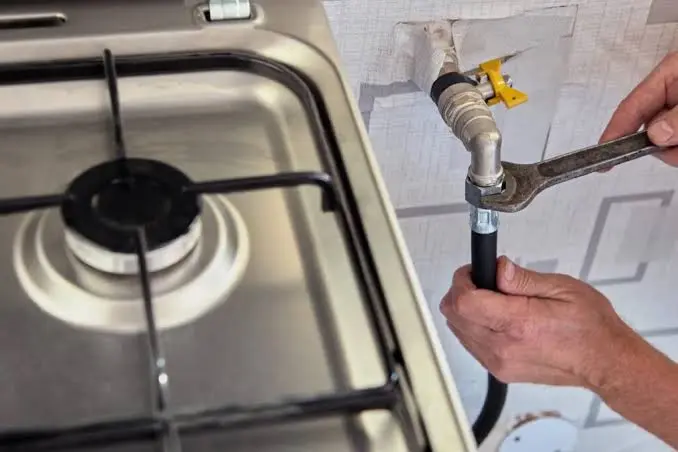
A licensed gas technician uses leak-detection solution on commercial gas valves. Even with all the right gear, the tiniest leak can be dangerous. That’s why hands-on leak testing is a must. Technicians often apply soapy water or electronic sensors at every joint – even a single bubble signals a problem.
Many modern businesses also install fixed gas detectors near the ceiling or inside utility areas; if gas drifts, these alarms can shut off the supply automatically. On the human side, train your staff to recognize gas warning signs and smell (natural gas has an added rotten-egg odorant).
Post emergency shut-off procedures where everyone can see them. In real-world terms, routine detection is more than a best practice – it’s critical. Experts emphasize that catching leaks early “safeguards your teams, customers and business”.
By combining technology (sensors, automatic valves) with vigilant checks, you create multiple layers of defense against invisible hazards.
How Commercial Gas Systems Repairs and Upgrades Improve Safety
Commercial gas systems evolve over time. Maybe a larger oven is installed, or you’re expanding to a new kitchen – each change affects the gas setup. Treat every repair or upgrade as a mini-project: plan it carefully, use licensed experts, and retest everything. For instance, converting from natural gas to LPG (bottled propane) requires new regulators, a properly vented cylinder rack and additional leak checks. Queensland actually references AS/NZS 1596 for LPG storage and handling, so those tank installations must meet extra rules.
Likewise, laying a new pipeline or meter (say for a multi-tenant site) usually means coordinating with the gas distributor and obtaining the right permits. In practical terms, it’s always safer to think of an upgrade as a fresh installation – you’ll need a new Gas Compliance Certificate when it’s done. The payoff: a correctly upgraded system stays efficient and safe as your business grows. In short, no corner-cutting.
Keep everything up to code, test thoroughly, and document the new setup so your gas equipment continues to run smoothly without surprise breakdowns.
Why Choose LTC Gas for Your Commercial Gas Needs in Brisbane
LTC Gas is Brisbane’s local gas fitting expert for businesses. We’re a Type A licensed company based in Wynnum, serving commercial clients citywide. Whether it’s a small café or a large industrial kitchen, our team “speaks gas” fluently – from piped LPG solutions to whole-of-building gas mains. We handle everything: professional commercial gas systems or installation, urgent repairs, preventive maintenance and compliance checks.
Our customers appreciate that we know Queensland’s rules inside-out, answer questions clearly, and never cut corners. With a friendly, GQ-style professionalism, we treat every job as if it were our own business. If you want a reliable partner for commercial gas services Brisbane can count on, we’re ready to help.
(We even offer a 24/7 emergency response for leaks or outages.) In short, we combine technical expertise with personal service to keep your Commercial gas system safe and your operations flowing.
Conclusion
Keeping your commercial gas systems safe in Brisbane comes down to a simple formula: follow the rules, hire qualified people, and stay proactive. Key takeaways: plan your system to AS/NZS 5601 standards; only use a licensed gas fitter who will pressurize and test the system fully; and always get (and keep) the Gas Compliance Certificate.
After installation, maintain the system with regular inspections, leak tests, and appliance servicing. In other words, don’t set it and forget it – treat your gas infrastructure like the critical service it is. Do these things and you’ll protect your staff, your customers and your bottom line.
Your gas safety is too important to gamble with. LTC Gas is here to help Brisbane businesses stay compliant and worry-free. Our experienced team can assist with everything from commercial gas installation to preventive maintenance, leak detection and repairs. We understand local regulations and we make safety our first priority. Contact LTC Gas today to book your system review or installation – we’ll ensure your gas systems are fully certified, running efficiently and keeping your workplace safe.
Frequently Asked Questions For Commercial Gas Systems
1. How often should my commercial gas systems be inspected?
Generally, we advise at least one full safety inspection per year for commercial sites, and often more frequently for very busy kitchens or heavy industrial use. Always have an inspection after any major change (like new appliances or piping). Think of it like car maintenance: the longer you go without a check-up, the higher the risk of a hidden problem. In practice, if you’re unsure, err on the side of safety and call your gas fitter.
2. What qualifications should my gas fitter have?
In Queensland, always use a Type A licensed gas fitter for commercial work. This is the highest level of gas license and it means they’re authorized to issue the official compliance certificate. A licensed gas fitter has proven they know all the regulations and standards, and carries insurance and fitters’ indemnity. If someone isn’t licensed (or claims they can do it “on the side”), the work isn’t legal and you could be on the hook for any damage or fines. It’s a small peace-of-mind premium to hire the real deal.
3. What should I do if I smell gas at my workplace?
Treat it as an emergency. First, evacuate the area immediately – do not use phones or electrical switches near the gas. Turn off the main gas valve if it’s safe to do so (usually located at the meter outside). Ventilate by opening doors or windows. Then call 000 for help – there are specialized gas emergency crews in Brisbane.
Finally, call your licensed gas fitter ASAP to find and fix the leak. In short: get people out, ventilate, call 000, and get professional help. It’s not something to ignore – gas leaks can escalate in seconds.
4. Is a Gas Compliance Certificate really necessary for every job?
Yes. In Queensland, any new installation, alteration, or repair on a commercial gas system must be certified. This certificate is proof that the work meets safety standards. Insurance companies often won’t pay out for a gas fire unless you have a valid compliance certificate.
Councils also check them for code compliance. In practice, this means after every job (big or small), your licensed fitter should supply a certificate. Keep it on file – it’s the document that legally says your gas system is safe.
5. Are there special rules for LPG or large pipelines?
Definitely. If your business uses bottled LPG (propane) – say for forklifts or kitchens – that system has additional requirements. The pipes, regulators and tank enclosure must meet AS/NZS 1596 standards, and tanks need secure stands with proper ventilation. For large pipelines (like new service connections or heavy-duty meters), you must coordinate with the gas distributor (and often lodge a permit).
The bottom line is: bigger or different fuel sources mean extra precautions. Always discuss LPG conversions or major pipework with your gas fitter – it’s not the time to improvise.