
Brisbane’s food truck scene is thriving. From weekend markets and music festivals to busy corporate lunch spots, mobile kitchens have become part of everyday Australian life. While customers notice the menu first, experienced operators know that a safe and compliant Food Truck Gas Installation is what truly keeps the business running. Without the right gas system, even the best food truck can face compliance issues, expensive downtime, or serious safety risks.
A professional Food Truck Gas Installation isn’t simply about connecting an LPG bottle to your cooking equipment. It involves careful planning, correct pipework, proper ventilation, appliance compatibility, leak testing, and compliance with Australian Gas Standards. Every component must work together to ensure your mobile kitchen operates safely whether you’re serving customers in Brisbane CBD, South Bank, Redcliffe, Ipswich, or anywhere across South East Queensland.
Think of your gas system as the heartbeat of your food truck. If one part isn’t installed correctly, the entire kitchen can be affected. That’s why investing in a professionally designed Food Truck Gas Installation isn’t an expense—it’s an investment in your business, reputation, and safety. After working with hundreds of commercial gas systems, we’ve seen firsthand how proper planning saves owners thousands of dollars in repairs and compliance issues later.
Whether you’re launching your first food van, upgrading an existing trailer, or replacing ageing equipment, understanding Food Truck Gas Installation requirements helps you make smarter decisions from day one. This guide explains everything Brisbane operators need to know, from LPG regulations and certification to ongoing maintenance and compliance.
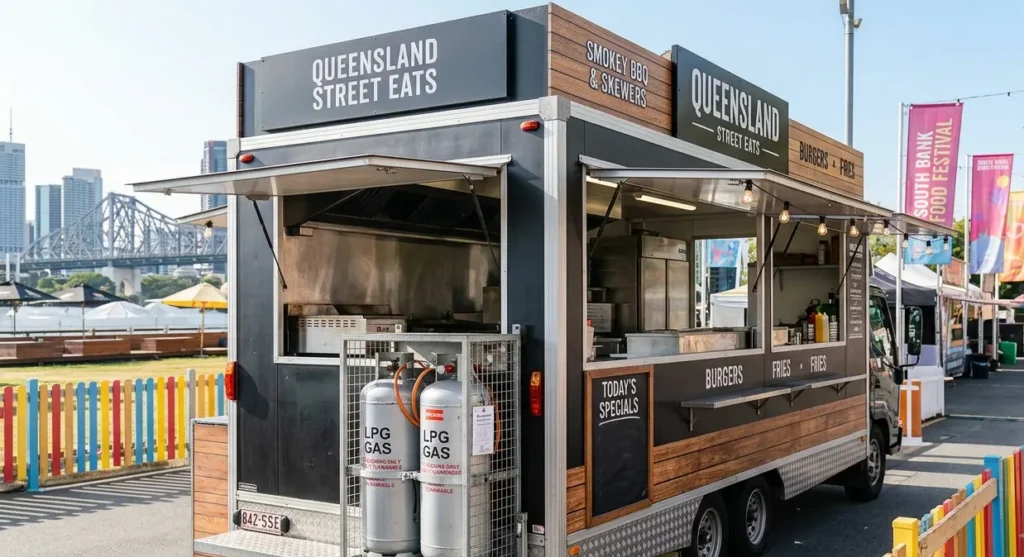
Why Food Truck Gas Installation Matters for Brisbane Businesses
Many new operators focus on branding, social media, and menu development before thinking about the kitchen itself. However, a properly completed Food Truck Gas Installation forms the foundation of every successful mobile food business. Without it, commercial cooking equipment cannot operate safely or legally.
Unlike residential gas systems, Food Truck Gas Installation is constantly exposed to movement, vibration, changing weather, and transportation. Every journey places stress on gas pipework, regulators, fittings, and appliances. That’s why mobile kitchens require specialist installation methods that differ significantly from standard commercial buildings.
Another important factor is legal compliance. Queensland regulations require commercial LPG systems to meet strict Australian standards before trading. A professionally completed Food Truck Gas Installation helps ensure your mobile kitchen passes inspections, receives certification, and remains compliant throughout its operation.
For Brisbane operators, investing in professional installation also reduces future repair costs. Properly installed Commercial LPG Systems experience fewer gas leaks, better appliance performance, improved fuel efficiency, and longer equipment life. In many cases, spending slightly more during installation saves thousands over the lifespan of the vehicle.
Common Businesses That Require Food Truck Gas Installation
Although food trucks are the most recognised example, many mobile businesses depend on professional Food Truck Gas Installation services to operate safely and legally.
These include:
- Food trucks serving festivals and public events
- Coffee vans using LPG equipment
- Mobile catering businesses
- Food trailers
- Mobile barbecue businesses
- Dessert and coffee trailers
- Event catering kitchens
Each business has different appliance requirements, which is why every Food Truck Gas Installation should be customised rather than copied from another vehicle.
Understanding Food Truck Gas Installation Components
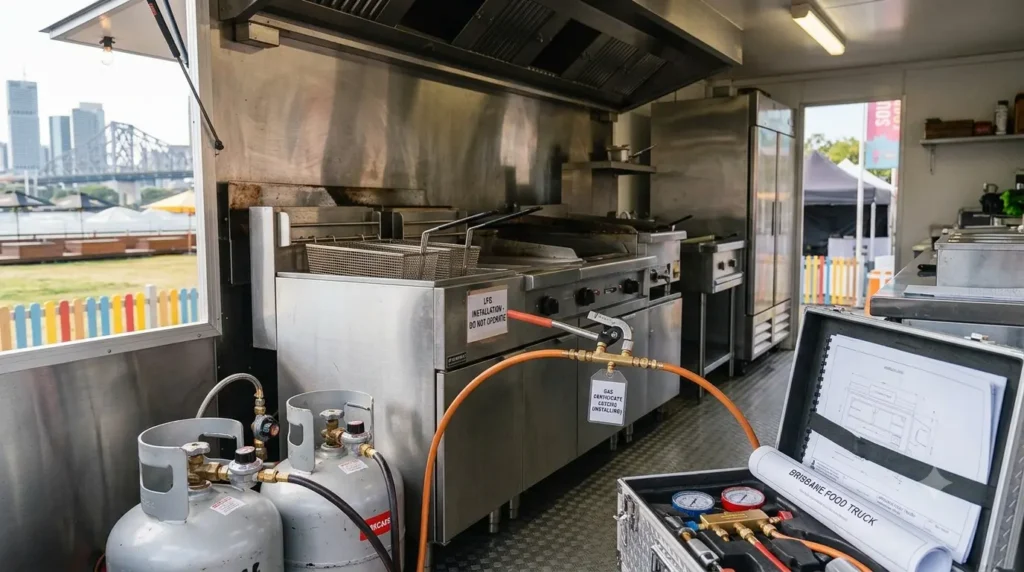
Every professional Food Truck Gas Installation consists of multiple components working together as one complete system. Missing or incorrectly installed parts can compromise both safety and performance.
The LPG cylinders supply fuel to the kitchen through regulators designed to maintain consistent gas pressure. From there, professionally installed copper or approved pipework distributes gas safely throughout the vehicle. Isolation valves allow each appliance to be independently controlled, while pressure regulators maintain stable performance even during busy service periods.
Modern Food Truck LPG Installation projects also include high-quality hoses, approved connectors, ventilation systems, emergency shut-off valves, and appliance-specific fittings. Every component plays an important role in creating a reliable Mobile Kitchen Gas Installation capable of handling daily commercial use.
Professional installers also perform Gas Line Installation according to appliance load calculations rather than simply connecting equipment together. This ensures fryers, ovens, cooktops, chargrills, and water heaters receive sufficient gas pressure during peak operation without affecting overall system performance.
Key Components Included in Every Professional Installation
| Component | Purpose |
| LPG Cylinders | Store commercial LPG safely |
| Regulators | Maintain correct gas pressure |
| LPG Pipework Installation | Deliver gas safely throughout the vehicle |
| Isolation Valves | Emergency shut-off for each appliance |
| Gas Appliance Installation | Connect cooking equipment safely |
| Gas Leak Testing | Verify there are no gas leaks |
| Gas Safety Inspection | Confirm system compliance before certification |
Australian Standards Every Food Truck Owner Should Know
When planning a Food Truck Gas Installation, Australian standards aren’t optional—they’re mandatory. Every commercial gas system must comply with national safety requirements designed to protect operators, staff, and customers.
A compliant installation considers everything from appliance spacing and ventilation to regulator sizing, pipe routing, and emergency isolation. These standards also influence how Commercial Gas Installation, Mobile Catering Gas Systems, and Food Trailer Gas Installation projects are designed across Australia.
Following these standards provides more than legal compliance. Proper installation improves efficiency, reduces maintenance, minimises breakdowns, and creates a safer working environment for everyone inside the mobile kitchen.
Experienced professionals like LTC Gas understand how these regulations apply specifically to Brisbane food trucks, ensuring every Food Truck Gas Installation meets current Australian Gas Standards while supporting long-term reliability.
Food Truck Gas Compliance: Why It Protects Your Business
Getting your Food Truck Gas Installation completed is only the beginning. Keeping it compliant is what allows your business to operate confidently across Brisbane. Whether you’re trading at Eat Street Northshore, local council events, private functions or weekend markets, inspectors may ask for proof that your gas system has been installed and tested correctly.
Professional Food Truck Gas Compliance is about far more than paperwork. It confirms that every regulator, appliance, gas line and safety device has been installed according to Australian requirements. A compliant system reduces the risk of gas leaks, fire hazards and unexpected equipment failures while giving you confidence during busy trading periods.
Many Brisbane food truck owners assume compliance is only required when the vehicle is first built. In reality, modifications such as adding a new fryer, replacing a cooktop or upgrading an oven can affect the existing Food Truck Gas Installation. Any changes should be assessed by a qualified professional to ensure the system continues meeting Australian Gas Standards.
Working with an experienced team like LTC Gas means every Food Truck Gas Installation is designed with compliance in mind from day one. Instead of fixing costly mistakes later, your gas system is planned correctly from the beginning, helping your business avoid unnecessary delays and future expenses.
Food Truck Gas Installation vs DIY Installation
Choosing between professional installation and attempting modifications yourself might seem like a way to save money, but the long-term risks are significant.
| Professional Food Truck Gas Installation | DIY or Unqualified Installation |
| Meets Australian Gas Standards | May fail compliance inspections |
| Completed by a Licensed Gas Fitter Brisbane | Higher safety risks |
| Includes Gas Leak Testing | No verified leak testing |
| Supports Food Truck Gas Certification | Certification may not be possible |
| Reliable Commercial LPG Systems | Increased chance of gas failures |
| Long-term safety and performance | Expensive repairs later |
A professionally completed Food Truck Gas Installation doesn’t just protect your equipment—it protects your staff, customers and business reputation.
The Importance of Working with a Licensed Gas Fitter Brisbane
Every commercial mobile kitchen has unique gas requirements. The number of appliances, total gas demand, available ventilation and vehicle layout all influence how the system should be designed. That’s why hiring a Licensed Gas Fitter Brisbane is one of the smartest investments you can make.
A licensed professional understands how to calculate gas loads, size regulators correctly, install approved fittings and ensure every appliance receives consistent gas pressure. They also know how to integrate Commercial LPG Systems, Gas Appliance Installation, and Gas Line Installation into one reliable system.
Most importantly, they understand local compliance requirements. A professional Food Truck Gas Installation isn’t simply connected and switched on. Every connection is checked, pressure-tested and verified before the vehicle is ready for operation.
I’ve seen operators spend thousands fixing poorly installed gas systems after purchasing second-hand food trucks. Investing in qualified workmanship from the beginning is almost always the more affordable option.
LPG Pipework Installation: The Backbone of Every Mobile Kitchen
The quality of your LPG Pipework Installation has a direct impact on safety and performance. Pipework carries LPG from the cylinders to every appliance, so even a small installation error can affect the entire kitchen.
During a professional Food Truck Gas Installation, pipework is carefully routed to minimise vibration damage while allowing easy maintenance. Approved materials are used throughout the vehicle, and pipe sizing is calculated based on the combined demand of all connected appliances.
Good pipework design also improves efficiency. When gas flows evenly throughout the system, appliances heat faster, consume fuel more efficiently and perform consistently during busy service periods. Whether you’re operating multiple burners, deep fryers or commercial grills, properly installed pipework keeps your kitchen running smoothly.
This is also where Commercial Kitchen Gas Services play a critical role. Experienced installers don’t simply connect equipment—they build a complete system that supports daily commercial use while maintaining long-term reliability.
Gas Leak Testing Is Never Optional
Every professional Food Truck Gas Installation must undergo thorough Gas Leak Testing before being placed into service. Even the smallest gas leak can create serious safety risks inside a confined mobile kitchen.
Testing involves checking every regulator, valve, fitting, appliance connection and section of pipework using professional equipment. The goal isn’t simply to confirm the system works—it’s to verify that it remains completely sealed under operating pressure.
Regular Gas System Testing is equally important after installation. Food trucks travel thousands of kilometres each year, and constant vibration can gradually loosen fittings or wear components. Routine inspections help identify minor issues before they become expensive repairs or safety concerns.
Many Brisbane operators schedule annual servicing alongside their Gas Safety Inspection. This proactive approach helps maintain compliance while extending the life of the entire gas system.
Food Truck Gas Certification: Why Documentation Matters
After your Food Truck Gas Installation has been completed, certification provides formal evidence that the work complies with applicable standards. This documentation can be essential when registering a new vehicle, obtaining council approvals or meeting insurance requirements.
A proper Food Truck Gas Certification process generally includes inspection of the complete gas system, verification of appliance connections, confirmation of pressure settings and successful completion of required safety tests. Once everything meets the necessary standards, the appropriate documentation can be issued.
Keeping these records organised is just as important as obtaining them. If your business expands, changes ownership or adds new appliances in the future, having accurate documentation makes upgrades and inspections significantly easier.
Understanding LPG Gas Compliance Certificate Requirements
Many first-time operators ask whether they need an LPG Gas Compliance Certificate. In commercial mobile kitchens, this documentation demonstrates that the gas installation has been completed and tested in accordance with relevant Australian requirements.
An LPG Gas Compliance Certificate can also provide confidence to insurers, event organisers and regulatory authorities that your Food Truck Gas Installation has been professionally completed.
For official information about Australian gas safety requirements and compliance responsibilities, refer to the Queensland Building and Construction Commission (QBCC) guidance on gas work and licensing.
Reviewing official information alongside advice from a qualified installer helps ensure your mobile food business remains compliant as regulations evolve.
Common Mistakes That Can Affect Food Truck Gas Installation
Even experienced business owners occasionally overlook important details when setting up a mobile kitchen. The most common issues include:
- Choosing domestic instead of commercial gas components.
- Installing additional appliances without reassessing gas demand.
- Ignoring regular Gas Safety Inspection schedules.
- Using non-approved fittings during repairs.
- Skipping routine Gas Leak Testing.
- Failing to update certification after system modifications.
Avoiding these mistakes helps keep your Food Truck Gas Installation safe, compliant and reliable throughout the life of your business.
Maintaining Your Food Truck Gas Installation for Long-Term Safety
A professionally completed Food Truck Gas Installation is not a “set and forget” system. Just like servicing your vehicle, your gas system needs regular inspections to ensure it continues operating safely and efficiently. Food trucks travel across Brisbane every week, and constant movement, road vibrations and changing weather conditions can gradually affect fittings, hoses and gas connections.
Routine maintenance keeps your Food Truck Gas Installation performing at its best while reducing the risk of unexpected breakdowns during busy trading hours. Preventative servicing is almost always less expensive than emergency repairs, especially when multiple commercial appliances rely on the same LPG system.
Experienced technicians inspect regulators, valves, flexible hoses, pipework, burners and appliance connections while performing a complete Gas Safety Inspection. If any component shows signs of wear, it can usually be replaced before it causes larger problems. Regular servicing also supports Commercial Kitchen Gas Services, Gas System Testing, and ongoing Food Truck Gas Compliance, helping your mobile kitchen remain reliable throughout the year.
Signs Your Food Truck Gas Installation Needs Professional Attention
Your gas system usually provides warning signs before a major problem develops. Paying attention to these early indicators can prevent costly repairs and improve overall safety.
If your appliances suddenly lose heat, burners produce uneven flames, gas consumption increases unexpectedly, or you notice the smell of gas inside the vehicle, your Food Truck Gas Installation should be inspected immediately. Delaying repairs can place both staff and customers at unnecessary risk.
Other warning signs include damaged LPG hoses, corroded fittings, loose pipework, difficulty lighting appliances, inconsistent gas pressure or visible wear around regulators. These issues often seem minor at first, but they can quickly develop into serious safety concerns if ignored.
A qualified Licensed Gas Fitter Brisbane can identify the cause, carry out professional Gas Leak Testing, and restore your Food Truck Gas Installation to full compliance before the issue escalates.
Why Choose LTC Gas for Food Truck Gas Installation in Brisbane?
When your business depends on reliable cooking equipment every day, experience matters. At LTC Gas, we understand that every food truck is different. A coffee van has different gas requirements than a burger trailer, and a dessert truck won’t have the same appliance load as a mobile barbecue kitchen. That’s why every Food Truck Gas Installation is carefully designed around your specific vehicle, equipment and business goals.
Our team specialises in Food Truck LPG Installation, Mobile Kitchen Gas Installation, Food Van Gas Installation, Food Trailer Gas Installation, Commercial LPG Systems, LPG Pipework Installation, Gas Appliance Installation, and complete Mobile Food Business Gas Installation services throughout Brisbane.
From the initial design through to testing, certification and ongoing servicing, we focus on quality workmanship, Australian compliance and practical solutions that keep your business moving. We don’t believe in shortcuts because your safety, reputation and investment deserve better.
Whether you’re fitting out a brand-new food truck or upgrading an existing mobile kitchen, LTC Gas delivers professional solutions designed for long-term performance and complete peace of mind.
Conclusion
Running a successful mobile kitchen requires much more than great recipes and a busy location. A professionally completed Food Truck Gas Installation provides the safe foundation every food business depends on. From Food Truck LPG Installation and Gas Appliance Installation to Gas Leak Testing, certification and ongoing maintenance, every part of the system plays an important role in protecting your staff, customers and investment. Choosing a compliant Food Truck Gas Installation today helps reduce future repairs, improve equipment performance and keep your business operating confidently across Brisbane.
If you’re planning a new food truck, upgrading your existing kitchen or need expert advice about Food Truck Gas Installation, the team at LTC Gas is ready to help. Our experienced professionals deliver safe, reliable and fully compliant gas solutions tailored to Brisbane’s mobile food industry. Contact LTC Gas today to discuss your project, arrange an inspection or book a professional Food Truck Gas Installation that keeps your business moving safely.
Frequently Asked Questions
1. What is Food Truck Gas Installation?
Food Truck Gas Installation is the process of designing, installing, testing and certifying an LPG gas system for a mobile food business. It includes gas pipework, regulators, appliances, isolation valves, leak testing and compliance with Australian Gas Standards to ensure safe commercial operation.
2. Does every food truck in Brisbane require professional gas installation?
Yes. Any commercial mobile kitchen using LPG appliances should have a professionally completed Food Truck Gas Installation carried out by a qualified gas fitter. Professional installation helps ensure compliance, improves safety and supports certification requirements.
3. How often should a Food Truck Gas Installation be inspected?
Although inspection frequency depends on how often the vehicle operates, most commercial operators benefit from regular servicing and periodic Gas Safety Inspection. Routine maintenance identifies worn components early and helps maintain Food Truck Gas Compliance.
4. Can I upgrade appliances after my Food Truck Gas Installation?
Yes, but every upgrade should be assessed by a qualified professional. Adding new cooking equipment may change gas demand, requiring modifications to your existing Food Truck Gas Installation and additional testing before the system is returned to service.
5. Why should I choose LTC Gas for Food Truck Gas Installation?
LTC Gas provides professional Food Truck Gas Installation services across Brisbane using licensed gas fitters, quality components and Australian-compliant installation methods. From new installations to maintenance, testing and certification, our team delivers reliable solutions tailored to your mobile food business.